



Discover the profound impact of heroine on society and the environment, uncover key insights, and learn how awareness can foster positive change.
The impact on society and environment of Heroine
Heroin does not just wreck individual lives; it quietly drains public budgets, reshapes local ecosystems, fuels crime, and destabilizes communities while people argue about completely the wrong details. Politicians love to fixate on dramatic busts and sensational headlines, yet the deeper costs – the ones that shape health systems, economies, and even forests – keep piling up in the background.
Public health data already paints a stark picture. In one recent year, approximately 15,482 Americans died from heroin-related overdoses[CDC / Wikipedia]. That is not a vague “crisis”; that is a body count large enough to empty a small city high school several times over. And that number sits on top of the nonfatal overdoses, chronic illnesses, shattered families, and the cascading social consequences that never make it into headline statistics.
The trend is not exactly reassuring either. Public health leaders have been warning for years that heroin use is rising across multiple groups, including men and women, most age brackets, and all income levels, with particularly sharp increases in groups that historically had lower rates of use[CDC]. As one former CDC director bluntly put it, heroin use has been increasing at an “alarming rate,” driven by the prescription opioid epidemic and cheaper, more available heroin[CDC]. That is the polite bureaucratic way of saying the situation is spiraling while most systems are still playing catch-up.
And the damage spreads far beyond the person holding the needle. The National Institute on Drug Abuse describes heroin as a highly addictive illegal drug whose use has repercussions that extend far beyond the individual user[NIDA]. Those “repercussions” show up as overcrowded emergency rooms, exhausted social workers, children in foster care, overloaded courts, and even lost forests and poisoned waterways in producer and trafficking regions. If that last part sounds exaggerated, it is only because most people have never bothered to connect the dots between a bag of heroin and a patch of rainforest that no longer exists.
Transportation of heroine costs a lot
The phrase “drug trafficking” sounds almost cinematic, but the reality is more tedious and far more expensive than most people assume. Moving heroin from fields and clandestine labs to urban users requires a sprawling underground logistics network: growers, brokers, transporters, street dealers, money launderers, and the constant cat-and-mouse with law enforcement. Between 2007 and 2013, heroin seizures by federal, state, and local law enforcement in the United States jumped by 289%, a sign of how aggressively this supply chain expanded and professionalized[Pew]. When seizures grow that rapidly, it usually means the underlying volume moving through the system has climbed even faster.
Those traffickers are not the only ones paying. Every shipment of heroin implies some combination of police operations, surveillance, prosecutions, and incarceration – all funded by taxpayers. Patrols, task forces, border checks, forensic labs, specialized prosecution units: these do not come cheap, and they multiply when heroin flows intensify. The “cost” of transportation is not only what cartels spend on couriers and bribes; it is also the resources communities must pour into trying to intercept that flow. High-profile busts make for dramatic press conferences, yet the day-to-day grind – the routine traffic stops, the apartment raids, the endless court dockets – is where the real financial bleed happens.
There is also a cost in community stability and safety that rarely gets quantified. Heroin does not move itself; it moves through neighborhoods, highways, border towns, and rural routes, leaving behind corruption risks, violence, and social strain. Smuggling corridors can reshape entire local economies, turning some regions into transit hubs where illegal profits overshadow legitimate work. When law enforcement pressure ramps up in one area, trafficking routes shift, often pushing violence and instability into new communities. People like to imagine trafficking as something that happens “somewhere else”; in reality, the transportation chain quietly weaves itself into ordinary roads, warehouses, ports, and even small-town main streets.
Addiction is pretty high for heroin and even higher for those with trauma
Heroin’s grip on the brain is not subtle. As NIDA notes, it is a highly addictive drug, and that is not just a technical label[NIDA]. Heroin hijacks the brain’s reward and stress systems so efficiently that what starts as voluntary use quickly slides into compulsion. People often talk about “willpower” as if that were the main variable, but the pharmacology of heroin is entirely indifferent to moral lectures. Once dependence sets in, the drug effectively rewires priorities: avoiding withdrawal becomes the central organizing principle of a person’s day.
Layer trauma on top of that, and the risk multiplies. Individuals who have lived through physical abuse, sexual assault, neglect, war, serious accidents, or chronic family chaos are more likely to turn to powerful substances as a way to dull emotional pain. Heroin, with its intense euphoria and numbing effect, is tailor-made for people desperate for relief. This is not mysterious; it is almost predictable. When someone is carrying years of unresolved trauma, an opioid that briefly makes everything feel distant and manageable can feel less like a “bad choice” and more like the only thing that has ever worked. The problem is that the bill for that short-term escape comes due brutally fast.
Society ends up paying that bill along with the individual. Heroin use has been rising across demographic groups including men and women, most age groups, and all income levels, with spikes in populations that historically saw lower usage[CDC]. When that increase intersects with high trauma loads – for example, in communities with long histories of violence, poverty, or discrimination – addiction risk deepens further. The result is predictable: more overdoses, more infectious disease transmission, more children growing up with unstable caregivers, and more pressure on already thin mental health and social services. That overdose figure – about 15,482 heroin-related deaths in one recent year in the United States alone[CDC / Wikipedia] – is just the sharpest visible edge of a much broader trauma-addiction cycle that plays out quietly in homes, shelters, and emergency rooms every single day.
Is the heroine production causing pollution?
Yes, heroin production absolutely contributes to pollution and environmental degradation, though it tends to do so out of sight, in rural regions that most consumers will never visit. The illicit drug economy as a whole, including heroin, has been linked by the United Nations Office on Drugs and Crime to serious environmental damage such as deforestation and loss of biodiversity[UNODC]. Opium poppy cultivation often involves clearing forested areas, degrading soils, and altering water systems. The chemicals used to process raw opium into heroin – acids, solvents, and other reagents – are typically handled with about as much environmental care as you would expect from clandestine labs trying to avoid detection.
Those labs have no waste-treatment departments or environmental compliance officers. Chemical byproducts are frequently dumped into rivers, streams, or shallow pits, contaminating water sources for local communities and wildlife. The UNODC has highlighted how the illicit drug economy can accelerate soil erosion, damage water quality, and fragment habitats, leading to long-term ecological harm that persists even if crop patterns later shift[UNODC]. If a legal factory behaved this way, there would be lawsuits, fines, and front-page outrage. Because this pollution happens under the radar – and far from the cities where the final product is consumed – it rarely makes the news.
The damage is especially visible when you zoom out to look at forest loss. In Central America, the illicit drug trade, which includes heroin, has been estimated to account for at least 30% of deforestation, with some regions experiencing up to 50% deforestation due to drug-related activities[Vice]. That happens because traffickers carve out new smuggling corridors, launder money through ranching or agriculture, and clear land to exert territorial control. The end result is that a portion of the global appetite for heroin is being paid for in lost rainforest, disrupted carbon storage, and vanishing species. So yes, the pollution and ecological costs are real – they are just conveniently outsourced to communities and ecosystems far away from the end user.
Heroine is excellent as a painkiller
Heroin’s original medical appeal was never a myth; as an opioid, it is an extremely powerful painkiller. That is precisely why it is so dangerous. Opioids work by binding to specific receptors in the brain and spinal cord, muting pain signals and often producing a sense of warmth, relaxation, or even euphoria. From a purely pharmacological standpoint, heroin does its job very effectively. The problem is that it does that job a little too well, and in a way that very quickly teaches the brain to crave more. The same mechanism that makes severe pain feel distant also erodes judgment, slows breathing, and creates a rapid pathway to dependence.
This is where people like to oversimplify. Some argue that heroin’s strength as a painkiller means it is somehow defensible or “worth the risk” for unbearable physical or emotional pain. That logic skips a few important steps. There are regulated medical opioids, prescribed by professionals who actually monitor dosage, interactions, and tapering. Heroin on the street is an entirely different beast: variable purity, unknown adulterants, no dosing standards, and no safety net. Calling heroin “excellent” as a painkiller without the rest of that sentence is like calling a house fire “excellent” at warming your living room. Technically true, catastrophically incomplete.
The real issue is that many people who end up using heroin for pain – whether physical or psychological – were never given safer, realistic options in the first place. Under-treated pain, untreated trauma, and fragmented health care systems create fertile ground for a drug that seems to offer instant relief. Once dependence sets in, the line between pain management and avoidance of withdrawal disappears. That is the point at which heroin stops being a “solution” and becomes a trap, dragging families, health services, and entire communities into its orbit. As NIDA emphasizes, heroin use has repercussions that extend far beyond the individual[NIDA]. Society absorbs those repercussions in hospital budgets, emergency responses, child welfare interventions, and, yes, in the quiet loss of forests and clean water thousands of miles away.
Moreover, the medical community has been grappling with the opioid crisis for years, as the over-prescription of opioids has led to a surge in addiction rates. Many patients who were initially prescribed opioids for legitimate medical reasons have found themselves trapped in a cycle of dependency, often turning to heroin when their prescriptions are cut off or become too expensive. This cycle of addiction is exacerbated by a lack of comprehensive pain management strategies that address both physical and emotional aspects of pain. As a result, individuals are left searching for relief in increasingly dangerous ways, often leading to devastating consequences not only for themselves but for their families and communities.
In addition to the physical toll, the emotional and psychological ramifications of heroin use are profound. Many individuals who struggle with addiction experience feelings of shame, isolation, and hopelessness, which can perpetuate the cycle of addiction. The stigma surrounding substance use disorders often prevents individuals from seeking help, leading to a vicious cycle where pain and trauma remain unaddressed. This underscores the urgent need for a more compassionate and holistic approach to addiction treatment, one that recognizes the complex interplay between mental health, trauma, and substance use.

The substances are rated by experts on drugs and addiction. Most drugs are researched upon and feedback has been gathered from users with experience. When possible we have also tried to gather knowledge from people involved in the chemical process and distribution to get a better picture on the overall impact.
Facts and Education

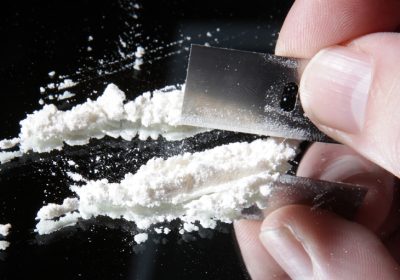
Cocaine
Cocaine has a high envirnomental impactCocaine is still one of the most widely used drugs on the planet — about 20 million people used it in 2019, mostly in North America and Europe.But the whole cocaine trade comes with a huge environmental cost. Growing, moving,…

Cannabis
Cannabis restore soil Cannabis enthusiasts like to talk about relaxation and creativity; farmers and environmental scientists tend to be more interested in the plant’s roots. Literally. Hemp, a variety of cannabis, sends down deep roots that stabilize soil, help prevent erosion and improve soil structure…
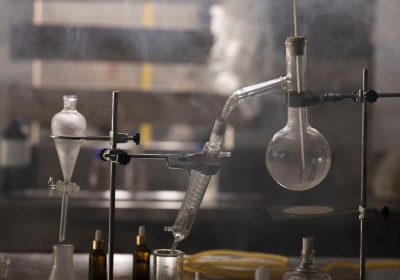
Amphetamine
Amfetamin impact Switching from plants to amphetamine is like moving from a garden to a chemistry lab. Amphetamine is not grown; it is synthesized. That alone shifts the environmental profile from fields and soil to reactors, solvents, precursor chemicals and waste management. The debate usually…
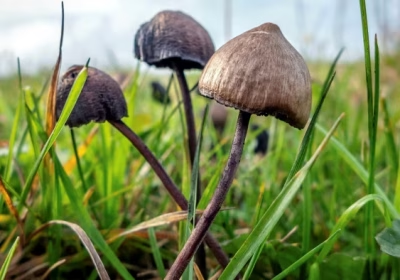
Psilocybin
Psilocybin could not be more different from amphetamine in origin or social mythology. Instead of shiny blister packs and clandestine labs, the source is something most people step over in forests and fields: mushrooms. That simplicity does not make psilocybin harmless or universally safe, but…